
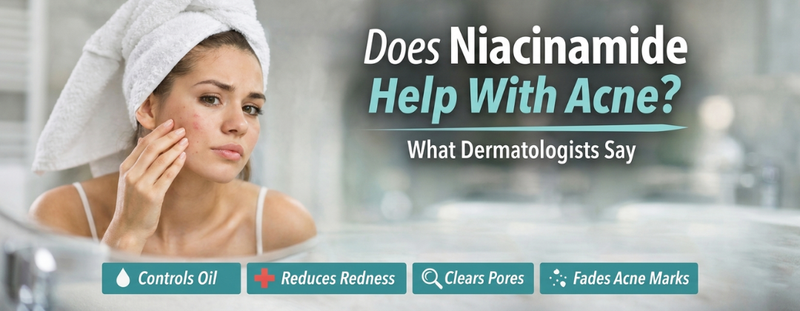
Niacinamide is a dermatologist-recommended ingredient that helps treat acne by controlling excess oil, reducing inflammation, strengthening the skin barrier, and fading acne marks.
Acne is one of the most common skin concerns affecting teenagers and adults alike. From painful pimples to oily skin and acne scars, finding the right skincare ingredient can feel overwhelming. One ingredient that dermatologists consistently recommend is niacinamide.
But does niacinamide really help with acne?
The short answer is yes. Dermatologists say niacinamide can be highly effective for acne-prone skin because it helps control oil production, reduces inflammation, and strengthens the skin barrier. Studies and dermatologist-backed reviews show that topical niacinamide may reduce sebum, calm redness, and help prevent clogged pores.
In this blog, we’ll break down what niacinamide does, how it helps acne, and what skincare experts recommend.
What Is Niacinamide?
Niacinamide is a form of Vitamin B3, a water-soluble vitamin known for its skin-repairing and anti-inflammatory properties.
It is commonly found in:
Dermatologists often suggest niacinamide because it works well for sensitive, oily, and acne-prone skin. It is also considered gentle compared to stronger actives like retinol or benzoyl peroxide.
How Niacinamide Helps With Acne
1) Controls Excess Oil Production
One major cause of acne is too much sebum (oil).
Niacinamide helps regulate oil production, which reduces the chances of clogged pores and breakouts. This makes it especially useful for people with oily skin.
Best For
Oily skin
Combination skin
Large visible pores
2) Reduces Inflammation and Redness
Acne often causes swelling, redness, and irritation.
Dermatologists say niacinamide’s anti-inflammatory properties help calm inflamed pimples and reduce post-acne redness.
Best For
3) Strengthens the Skin Barrier
A damaged skin barrier can worsen acne.
Niacinamide supports the production of **ceramides and keratin**, helping your skin stay hydrated and protected. A stronger barrier means fewer breakouts caused by irritation.
Benefits
4) Minimizes the Look of Pores
While it doesn’t physically shrink pores, niacinamide helps make pores appear smaller by reducing oil and improving skin texture.
5) Helps Fade Acne Marks
Niacinamide can also help with post-acne dark spots and pigmentation.
This makes it useful not only for active acne but also for the marks acne leaves behind.
What Dermatologists Say About Niacinamide for Acne
According to dermatologists, niacinamide is one of the safest and most effective ingredients for mild to moderate acne.
Dermatologist-Recommended Reasons
Experts especially recommend 5% niacinamide serums for daily use because they provide results without excessive irritation.
How to Use Niacinamide for Acne
Morning Routine
Night Routine
Pro Tip
Start with once daily, then increase to twice daily if your skin tolerates it.
Who Should Use Niacinamide?
Niacinamide is ideal for:
Possible Side Effects
Niacinamide is generally safe, but in rare cases it may cause:
Dermatologists recommend a patch test first.
Conclusion
So, does niacinamide help with acne? Absolutely.
Dermatologists widely recommend niacinamide because it targets multiple acne triggers at once—oil production, inflammation, skin barrier damage, and post-acne marks.
If you want a gentle yet effective ingredient for clearer skin, niacinamide is one of the best choices for your routine.
For best results, choose a 5% niacinamide serum and use it consistently for at least 4–8 weeks.
FAQs
1. Can niacinamide remove acne completely?
Niacinamide helps reduce acne significantly, especially mild to moderate breakouts, but results depend on your skin type and routine.
2. How long does niacinamide take to work on acne?
Most people notice improvements in 2 to 6 weeks.
3. Can I use niacinamide every day?
Yes, dermatologists say it is safe for daily use, morning and night.
4. Which percentage of niacinamide is best for acne?
A 5% concentration is usually ideal for acne-prone skin.
5. Can I use niacinamide with salicylic acid?
Yes, they work very well together for acne and oily skin.


Orders are shipped seamlessly between countries

Orders are shipped seamlessly between countries

Orders are shipped seamlessly between countries

Orders are shipped seamlessly between countries